
GCC Office Space in Gurgaon: Why NH8 Leads for Global Capability Centres in 2026
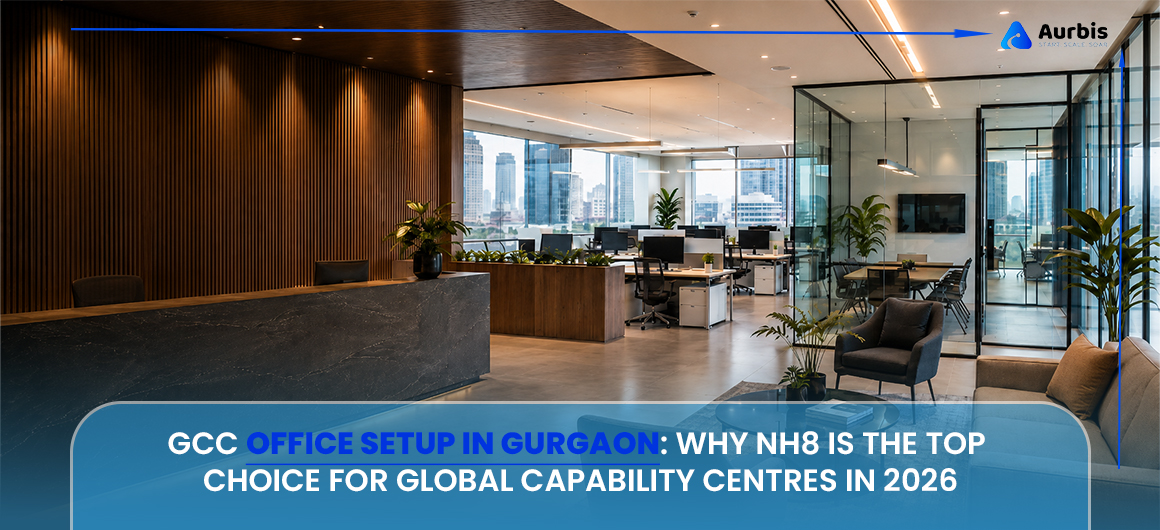
Global capability centres have moved past their original mandate of cost arbitrage. In 2026, GCCs in India are running product engineering, analytics, and core business functions for their parent organizations, which means the office they operate from has become a strategic decision rather than an administrative one. Gurgaon has emerged as the preferred base for this shift, and within Gurgaon, the NH8 corridor has become the default choice for enterprises setting up or expanding their India centres.
This article covers why NH8 leads, what a GCC needs from its office format, and what to evaluate before signing a lease. For teams evaluating LEED-certified, managed office spaces on NH8, Aurbis Summit is an ideal example worth reviewing early in the process.
Why Are GCCs Choosing Gurgaon For Their India Operations?
Delhi NCR holds one of the largest concentrations of GCCs in India, and Gurgaon accounts for a significant share of that base. Three factors drive this concentration.
First, talent availability. Gurgaon sits within commuting range of a large, technically skilled workforce across engineering, finance, analytics, and enterprise technology functions, supported by NCR’s education and professional services base.
Second, MNC density. Gurgaon already hosts a large number of Fortune 500 and multinational offices, which have built out a mature ecosystem of enterprise-grade real estate, compliance advisory, banking, and vendor services that new GCCs can plug into rather than build from scratch.
Third, infrastructure maturity. Gurgaon’s road network, metro connectivity, and proximity to Indira Gandhi International (IGI) Airport reduce the operational friction of running a centre that regularly hosts visiting leadership, auditors, and global stakeholders.
Together, these factors make Gurgaon a lower-risk, faster-to-operational choice than emerging alternative cities for enterprises that need to be functional within a defined timeline.
Why is Gurgaon NH8 A Top Location For GCC Office Space In India?
Within Gurgaon, NH8 has become the corridor of choice for GCC setups specifically, for reasons distinct from the city-level case above.
NH8 offers direct connectivity to IGI Airport, typically within a 20 to 30-minute drive depending on traffic, which matters for GCCs that host frequent international visitors from company leadership teams. It also connects efficiently to Delhi and other NCR business districts, making it accessible for cross-city meetings without requiring a Cyber City or Golf Course Road address.
The corridor has a growing base of Grade A commercial developments built specifically for enterprise occupiers, as opposed to the older, more fragmented stock found in some central Gurgaon locations. This has allowed NH8 to attract large-floor-plate buildings suited to GCC headcount, which often starts from 100 to 300 seats and more.
NH8 also offers more competitive rental positioning than the established central business districts, without a material trade-off in build quality for buildings that meet current enterprise standards. For a GCC evaluating three- to five-year lease commitments, this cost-to-quality ratio is a material factor in the location decision.
Which Gurgaon Locations Are Best For Enterprise Office Space In 2026?
Enterprises typically evaluate four corridors when shortlisting Gurgaon for a GCC:
- Cyber City continues to be the most established business destination, commanding the highest rental rates and hosting the largest concentration of existing MNC occupiers. It suits centres that prioritize brand address over cost efficiency.
- Golf Course Road offers a premium, mixed-use environment with strong retail and hospitality density, but at a rental premium comparable to or exceeding Cyber City.
- Sohna Road has expanded rapidly but is still building out its Grade A commercial base, and connectivity to the airport is less direct than NH8.
NH8 sits at the intersection of the two variables that matter most to a GCC decision: connectivity and cost-adjusted quality. It offers airport proximity comparable to Cyber City, Grade A stock comparable to Golf Course Road, and rental rates below both. For GCCs setting up in 2026 with a mandate to control real estate cost without compromising on infrastructure standards, NH8 is increasingly the corridor that clears both requirements.
Which Office Buildings on NH8 Gurgaon Are LEED-Certified?
LEED certification has become a standard requirement in GCC site selection, driven by the company’s ESG commitments and, in many cases, formal sustainability reporting obligations.
Aurbis Summit on NH8 holds LEED Platinum Pre-Certification, placing it among the highest sustainability ratings available in the corridor. The building is positioned specifically for enterprise and GCC occupiers, with IBMS (Integrated Building Management System) infrastructure that large-scale ESG reporting requires, covering energy consumption tracking, water usage, and air quality monitoring.
For a GCC that needs to report facility-level sustainability metrics back to a global parent, occupying a pre-certified LEED building removes a significant amount of retrofitting and documentation work that would otherwise fall on the India team.
What Type Of Office Space is Best For A GCC In Gurgaon?
GCCs typically choose between three formats: a conventional lease and self-built office, a coworking or flexible desk arrangement, or a managed office space.
A traditional lease gives full control over design and branding but requires the GCC to handle fit-outs, vendor management, and facilities operations directly, which extends timelines to six months or more before occupancy and requires a dedicated facilities function from day one.
Coworking space offers speed but is generally incompatible with GCC requirements at scale. Most coworking formats cap out well below the 100 to 300 seat range that a GCC typically needs, and they rarely offer the compliance documentation, dedicated infrastructure, or brand-controlled environment that a global parent company requires for a centre handling core business functions.
Managed office space sits between the two. The operator handles infrastructure, compliance, and facilities, while the GCC gets a dedicated, brandable floor or building without the lead time of a ground-up fit-out. For most GCCs setting up in 2026 on a defined go-live timeline, managed space has become the default format, reserving fully custom-built offices for centres with headcount commitments large enough to justify the longer build cycle.
What Does Managed Office Space For GCC Teams Include?
A managed office built for GCC occupancy typically includes furnished workstations and cabins sized to the agreed headcount, meeting rooms and conferencing infrastructure suited to global calls across time zones, and IBMS-managed building systems covering HVAC, power backup, security, and access control.
It also typically includes F&B and pantry infrastructure, dedicated IT and network provisioning that can be scoped to the GCC’s specific compliance and security requirements, and facilities management staff handled by the operator rather than the occupier.
The distinction from a basic serviced office is compliance readiness. GCCs operating in regulated industries such as banking, insurance, or healthcare need documentation around data security, physical access control, and business continuity that a standard serviced office is not built to provide. A managed office built for enterprise occupiers addresses this at the building level rather than requiring the GCC to retrofit it after move-in.
What Are The Benefits of Managed Office Space for GCCs in Gurgaon?
The primary benefit is cost predictability. A managed office model consolidates rent, fit-outs, and facilities costs into a single, forecastable line, which simplifies budgeting for a GCC finance function that has to justify India costs to a global parent regularly.
The second benefit is speed. Because the space is largely fit-out ready, a GCC can move from lease signing to occupancy well within the time that a self-built office requires. This plays a pivotal role when a centre has a committed operational date tied to a broader offshoring or restructuring decision.
The third benefit is scalability. Managed operators with multiple properties or floors in a corridor can often accommodate headcount growth by expanding within the same building or portfolio, avoiding a full relocation as the centre scales.
Finally, managed space reduces the operational burden on the GCC’s India leadership team, who can focus on ramping up delivery rather than running facilities, vendor contracts, and building compliance.
How Do Global Companies Set Up A GCC Office on NH8 Gurgaon?
The setup process for a GCC office on NH8 generally follows four stages.
- Site Selection and Requirement Scoping
The parent company and India leadership define headcount projections, functional requirements (call center infrastructure, secure zones for regulated functions, training space), and target date to go live.
- Legal Entity and Compliance Setup
In parallel with site selection, the GCC’s Indian legal entity, registrations, and statutory compliance framework are established, since these run on a separate timeline from a real estate decision but need to align with occupancy.
- Space Finalization and Fit-Out
For managed office spaces, this stage is largely a customization exercise: branding, signage, workstation layout, within an existing fit-out shell, which is materially faster than a ground-up build.
- Onboarding and Ramp-Up
Once operational, the centre begins phased hiring and onboarding, often starting with a leadership and functional lead cohort before scaling to full headcount over subsequent quarters.
For enterprises evaluating this path on NH8, reviewing an existing operational building such as Aurbis Summit early in the site selection stage can shorten the overall timeline, since much of the compliance and infrastructure diligence is already documented at the building level.
How Quickly Can A GCC Team Move Into A Managed Office In Gurgaon?
Timelines vary by the extent of customization required, but managed office space on NH8 typically allows occupancy within weeks of lease finalization for standard fit-outs, compared to six months or longer for a fully custom-built traditional lease.
This timeline advantage is the primary reason managed space has become the default for GCCs operating under a fixed go-live commitment from their parent company, where delays in physical setup directly delay the centre’s ability to begin delivery.
What is the Cost Outlook for GCC Office Space on NH8 Gurgaon in 2026?
Rental rates on NH8 remain positioned below Cyber City and Golf Course Road for comparable Grade A quality, which is a primary driver of the corridor’s growing GCC occupancy. Beyond headline rent, the managed office model’s consolidated cost structure, covering fit-out, facilities, and maintenance within a single agreement, gives GCC finance functions a more predictable total cost of occupancy than a traditional lease, where fit-out and ongoing facilities costs are typically negotiated and managed separately.
For a GCC finance team reporting India costs to a global parent, this predictability is often as significant a factor as the headline rental rate.
Why Aurbis
Aurbis operates managed office space across Gurgaon, built specifically for enterprise and GCC occupiers rather than general commercial tenants. Its properties run on a consistent IBMS framework and the AurbisOne amenity and services layer, giving occupiers building-level infrastructure for energy, security, and facilities management, along with day-to-day services such as meeting infrastructure and F&B, delivered as part of the managed space rather than sourced separately by the occupier.
Aurbis Summit, its property on NH8, holds LEED Platinum Pre-Certification and applies this same framework at the building level. Combined with NH8’s connectivity to IGI Airport and the broader NCR business district, Aurbis Summit is built to meet the specific requirements a GCC brings to a site selection process: compliance readiness, sustainability documentation, and a fast path to occupancy.
Conclusion
NH8 has moved from a secondary Gurgaon corridor to the primary choice for GCCs evaluating India office space in 2026, driven by its combination of airport connectivity, Grade A availability, and rental positioning relative to Cyber City and Golf Course Road. As GCC mandates continue to shift toward core, high-value functions, the office format supporting that shift has moved with it, from ground-up leased space toward managed, compliance-ready buildings that can be occupied in weeks rather than months.
For a GCC leadership team, the site selection decision now carries the same weight as the legal entity and hiring plan, since a delayed or poorly specified office directly delays the centre’s ability to deliver against its mandate. NH8’s combination of connectivity, Grade A stock, and cost-adjusted quality addresses that risk more directly than the alternative Gurgaon corridors, which is why it has become the default recommendation for enterprises setting up or expanding an India centre in 2026.
For enterprises evaluating a managed, LEED-certified option on the corridor, Aurbis Summit is worth including in the shortlist.
Get in touch with Aurbis to discuss space requirements and current availability.
FAQs
Q: What is a GCC office in India?
A: A global capability centre (GCC) office is a dedicated facility set up by a multinational company in India to run core business functions for its global operations, such as technology development, analytics, finance, or shared services, rather than outsourcing these functions to a third party.
Q: What is the best location for office space in Gurgaon?
A: The best location depends on the occupier’s priorities. Cyber City and Golf Course Road offer established, premium addresses at higher rental rates, while NH8 offers comparable Grade A quality and airport connectivity at a more competitive cost, making it a strong choice for GCCs focused on cost-adjusted quality.
Q: Is LEED-certified office space available in Gurgaon?
A: Yes. Several NH8 developments, including Aurbis Summit, hold LEED Platinum Pre-Certification, meeting the sustainability standards increasingly required by global parent companies for their India GCC operations.
Q: How far is NH8 Gurgaon from IGI Airport?
A: NH8 properties are typically within a 20 to 30 minute drive of Indira Gandhi International Airport, depending on traffic conditions, making the corridor well suited to centres that host frequent visits from international leadership.
Q: Is NH8 Gurgaon good for enterprise office space?
A: Yes. NH8 combines Grade A commercial stock, strong airport and NCR connectivity, and rental rates below Cyber City and Golf Course Road, making it a well-positioned corridor for enterprise and GCC occupiers scaling headcount in 2026.
Q: What is the difference between a GCC and a coworking space?
A: A GCC is an organizational function, a dedicated centre running specific business operations for a global parent company. Coworking is a real estate format, a shared flexible workspace. A GCC can be housed in a coworking space at a small scale, but most GCCs outgrow coworking quickly and move to managed or traditional leased office space that supports dedicated infrastructure, compliance requirements, and headcount scale.