
How Energy, Water, and Waste Management Make an Office Space More Sustainable
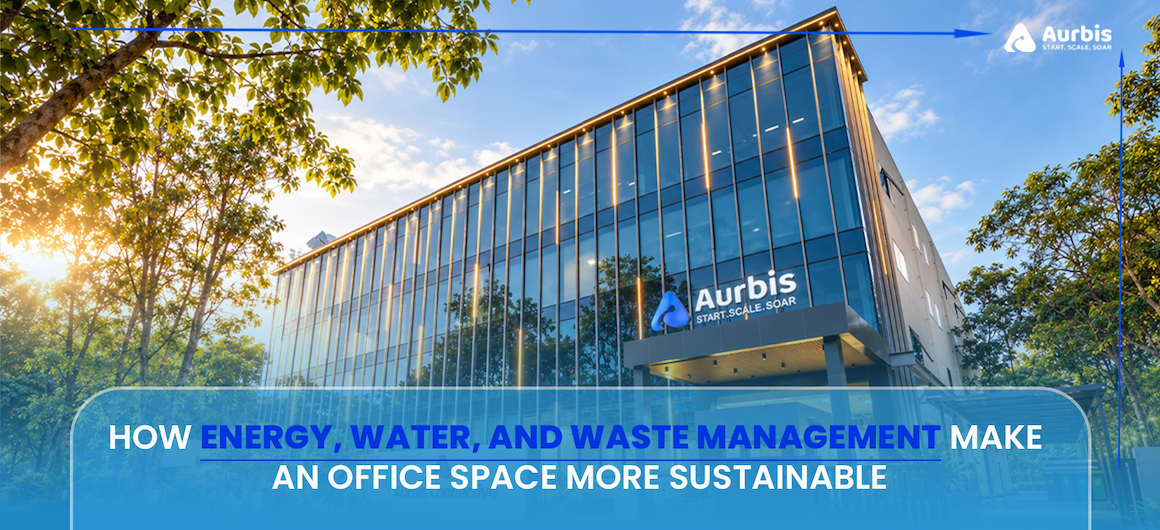
Office spaces are increasingly being evaluated not just on location and cost, but on how sustainably they operate. A sustainable office space in India actively manages energy, water, and waste as part of daily operations, rather than relying on surface-level gestures like a few plants in the lobby or a recycling bin near the pantry. This shift is being driven by a mix of factors, including rising utility costs, tighter regulatory expectations around environmental disclosures, and a growing preference among employees and clients for workplaces that reflect genuine environmental responsibility.
Understanding what actually makes an office space sustainable helps cut through vague claims and marketing language. This article looks at how energy, water, and waste management work together as the three operational pillars of a sustainable building, how technology supports and monitors them, and why they matter for businesses today.
What Are The Key Features Of A Sustainable Office Space In India
A sustainable office space rests on three operational pillars: energy management, water management, and waste management. Energy management covers how a building generates, consumes, and conserves electricity, from lighting and HVAC to on-site renewable generation. Water management covers how a building sources, treats, recycles, and monitors its water use, which matters even more in a country where municipal water supply is inconsistent across most metros. Waste management covers how a building segregates, processes, and disposes of everything from paper to e-waste to cafeteria food waste.
None of these pillars function well in isolation anymore. The buildings that perform best combine all three with a smart building management system that monitors consumption in real time and flags inefficiencies before they become expensive problems. Certifications like EDGE, LEED, and GRIHA exist specifically to verify that a building meets measurable thresholds across these categories, rather than making unverified claims about being green.
How Does Energy Management Make An Office Space More Sustainable
Energy management is usually the largest lever in any sustainability effort, simply because energy consumption tends to be the highest recurring operational cost and environmental impact in a commercial building. Energy-efficient office buildings are designed and operated to reduce consumption without compromising comfort or usability.
This starts with the building envelope itself. Better insulation, efficient glazing, and orientation that reduces heat gain all lower the baseline cooling load before any equipment even switches on. From there, HVAC systems are tuned for efficiency rather than left running on fixed schedules regardless of occupancy. LED lighting replaces older fixtures, and occupancy sensors ensure lights and air conditioning are not running in empty rooms or after hours.
The end goal for many organizations is net-zero office space, a building that produces as much energy as it consumes over a given period. This is usually achieved through a combination of aggressive efficiency measures and on-site renewable generation. Certification frameworks like EDGE specifically measure energy savings against a standard baseline, which gives enterprises a verified benchmark rather than a marketing claim when comparing buildings.
How Does Water Management Work In Green Office Buildings
Water management in green office buildings covers four main areas: reducing consumption at the fixture level, treating and reusing water on site, capturing rainwater, and monitoring usage continuously to catch leaks or waste early. Low-flow fixtures and sensor-based taps cut consumption without any change in user experience. Greywater recycling systems treat water from sinks and showers so it can be reused for flushing or landscaping rather than drawing fresh water for those purposes. Rainwater harvesting captures runoff during monsoon months and stores it for use across the rest of the year.
Water metering ties all of this together. Without granular metering, a building cannot tell the difference between normal consumption and a slow leak that wastes thousands of litres over a month. Metering also feeds directly into the reporting that certifications and ESG frameworks require.
Water management carries a different weight in India compared to markets where municipal water supply is reliable and consistently available. Many Indian metros face seasonal shortages, inconsistent municipal pressure, and growing dependence on tanker supply during peak summer months. A building that manages its own water efficiently, through recycling and harvesting, is less exposed to these disruptions and reduces strain on already stretched municipal systems. This is why water-efficient office buildings are treated as a core requirement rather than an optional feature in Indian green building standards.
What Is Waste Management In Commercial Office Buildings
Waste management in a commercial office building covers everything the building generates and how it is handled after use. This includes general solid waste from daily operations, e-waste from replaced electronics and IT equipment, construction and demolition waste during fit-outs or renovations, and organic waste from cafeterias and pantries.
The distinction that matters most here is between waste management that happens after the fact and waste that is designed out from the start. A building fitted with segregated waste points from day one, with clear signage and accessible bins for dry, wet, and hazardous waste, generates far less landfill-bound material than one that adds segregation as an afterthought. Construction waste in particular is far easier to reduce through material planning at the design stage than to manage once a fit-out is already underway.
How Can Offices Reduce Waste Effectively
Reducing waste effectively starts with segregation at the source, since waste that is mixed at the point of disposal is far harder and more expensive to sort and recycle later. Clearly labelled bins for dry waste, wet waste, and e-waste, placed where people actually generate that waste, make compliance easier for everyone in the building.
Composting organic waste from cafeterias and pantries diverts a significant volume from landfill and can be processed on-site in larger buildings or through a local vendor partnership in smaller ones. Partnering with certified recyclers for e-waste ensures old electronics are processed safely rather than ending up in general waste streams. Digital-first policies, from reducing printed documentation to digitizing vendor invoices, cut paper waste at the source rather than managing it after generation. Regular waste audits also help identify where the largest volumes are coming from, so reduction efforts can be targeted rather than generic.
What Is A Smart Building Management System
A smart building management system, often shortened to BMS, is centralized software that monitors and controls a building’s core systems from a single dashboard. This typically includes HVAC, lighting, energy consumption, and water usage, and in more advanced implementations, waste monitoring as well.
Instead of facility teams manually checking meters or responding to complaints about temperature, a BMS continuously pulls data from sensors across the building and adjusts systems automatically or flags issues for a human to review. This is the technology layer that connects the three pillars discussed above, energy, water, and waste, into one coordinated operation rather than three separate manual processes.
How Does IoT Help With Energy And Water Monitoring In Office Buildings
Internet of Things sensors are what make real-time monitoring possible in the first place. Energy sensors track consumption at the circuit or floor level, rather than relying on a single building-wide meter that hides where the actual usage is coming from. Water sensors similarly track flow rates in real time, which means a leak or an unusual spike in consumption gets flagged within hours rather than showing up as a surprise on the next monthly bill.
This granular, continuous data is what separates a smart sustainable building from one that simply has efficient fixtures installed. Efficient fixtures reduce consumption, but sensors and monitoring are what allow a building to catch problems early, verify that systems are actually performing as designed, and generate the data needed for ESG reporting.
How Do Smart Buildings Manage Waste And Energy In Real Time
Where IoT monitoring is about visibility, real-time management is about the automated response that follows. A smart building does not just tell facility teams that energy consumption spiked in a particular zone; it can automatically adjust HVAC output based on actual occupancy detected through sensors, rather than running at a fixed schedule regardless of how many people are actually in that zone.
The same principle applies to waste. Smart bins fitted with fill level sensors can alert facility teams when they need emptying, rather than relying on fixed collection schedules that either waste labour on half-empty bins or let bins overflow before anyone notices. On the reporting side, automated data collection from all these systems feeds directly into compliance and sustainability reports, removing the manual effort of pulling numbers together from multiple sources every reporting cycle.
How Does Energy Efficient Office Space Help Enterprises Meet ESG Targets
Energy-efficient, ESG-compliant office space is no longer just a landlord concern. Enterprises leasing office space are increasingly expected to report on the environmental impact of their operations, and the building they operate out of is a direct input into that reporting. A sustainable managed office space, where energy, water, and waste are all monitored and documented, makes this reporting significantly easier because the data already exists rather than needing to be estimated or reconstructed.
This matters for a few concrete reasons. Investors and lenders are increasingly factoring ESG performance into their evaluation of a company. Regulatory reporting requirements around sustainability disclosures are expanding across sectors. And enterprise clients themselves are beginning to ask their vendors and partners about the sustainability of their operations, including where they work from. Choosing an office space with verified energy and water performance is one of the more straightforward ways an enterprise can strengthen its ESG position without redesigning its entire operating model.
Which Office Buildings In India Have The Best Energy And Water Management Systems
The clearest way to identify strong energy and water management in a building is through its certification tier rather than unverified marketing claims. EDGE certification verifies minimum savings thresholds across energy, water, and materials compared to a standard baseline, and buildings can be Pre-EDGE Certified during design or fully EDGE Certified after performance verification. LEED, particularly at the Platinum tier, and GRIHA are the other major frameworks used to benchmark Indian commercial buildings.
When evaluating office space, the most reliable approach is to ask directly what certification a building holds, at what tier, and whether that certification has been verified post-construction or is still at the design stage. This single question filters out a large share of buildings making informal sustainability claims without any independent verification behind them.
How Does Aurbis Support Sustainable Office Operations?
Aurbis Business Parks operates its portfolio with exactly this kind of verified, system-level approach to sustainability. Multiple properties across the portfolio hold Pre-EDGE/EDGE certification and LEED Platinum certification, which means the energy and water performance discussed throughout this article is independently verified rather than self-reported.
Aurbis One, the energy monitoring system deployed across the portfolio, gives facility teams the real-time visibility into energy and water consumption described earlier in this article, the kind of monitoring that turns efficient design into consistently efficient operation over the life of the building. For enterprises evaluating office space with sustainability and ESG reporting requirements in mind, this combination of verified certification and active monitoring is what separates a building that claims to be sustainable from one that can actually demonstrate it.
Conclusion
Sustainability in a commercial office building comes down to three operational pillars working together: energy management that reduces consumption and moves toward net zero, water management that reduces dependence on strained municipal supply, and waste management that is designed in rather than added on afterward. Smart building systems and IoT monitoring are what make it possible to manage all three consistently, rather than relying on efficient design alone and hoping it holds up over years of operation.
For enterprises evaluating office space in India, the building’s certification tier and its monitoring systems are the two clearest indicators of whether its sustainability claims are backed by verified performance.
Get in touch with Aurbis to find office space built on exactly this standard.
FAQs
Q: What is the difference between a green office building and a regular office building?
A: A green office building is designed and operated to reduce resource consumption and environmental impact through measures like energy-efficient systems, water recycling, and waste segregation, while a regular office building typically has no structured system for measuring or reducing any of these.
Q: What is net zero office space, and how is it achieved in India?
A: A net zero office space produces as much energy as it consumes over a given period, typically achieved through a combination of energy-efficient design, renewable energy generation, and offsetting any residual consumption.
Q: What is a smart sustainable building?
A: A smart sustainable building combines sustainable design and operational practices, such as energy and water efficiency, with connected technology like IoT sensors and building management systems that monitor and automate resource use in real time.
Q: Does a sustainable office reduce operating costs?
A: Yes, reduced energy and water consumption directly lowers utility costs, and efficient waste management can reduce disposal and compliance costs over time, though the extent depends on building age and the specific systems installed.
Q: Are sustainable office spaces more expensive than regular offices?
A: Upfront costs can be higher due to efficient systems and certification processes, but operating cost savings over the building’s lifecycle often offset this difference, making total cost of occupancy comparable or lower.
Q: How does sustainability improve employee productivity?
A: Better indoor air quality, natural lighting, and efficient climate control, all common features of sustainable offices, are associated with improved employee comfort and reduced sick days, which indirectly supports productivity.
Q: How do enterprises benefit from sustainable office spaces?
A: Enterprises benefit through lower operating costs, easier ESG reporting and compliance, improved employee wellbeing, and alignment with investor and regulatory expectations around corporate sustainability.