
Sustainable Managed Office Space Providers: Why Enterprises Are Prioritizing Green Workspaces
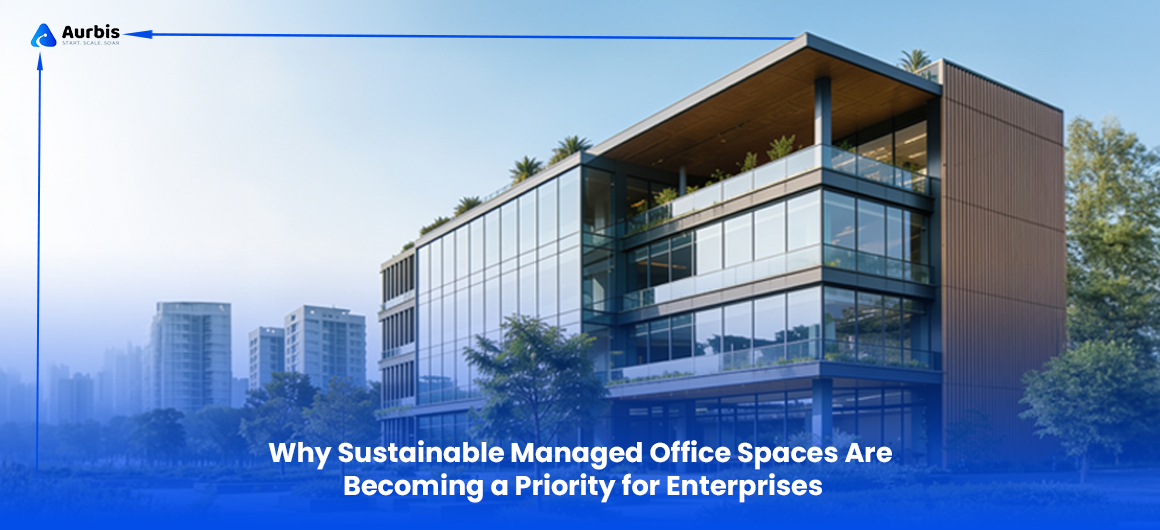
Office space decisions now carry more weight than a simple real estate choice. Sustainability, ESG reporting, employee experience, and long-term operating efficiency are now part of every real estate decision. Sustainable managed office spaces enable businesses to move into certified, enterprise-ready workplaces without the complexity of handling construction, fit-outs, regulatory compliance, or day-to-day facility management on their own. By partnering with sustainable managed office space providers, organizations can focus on growth while operating from efficient, environmentally responsible workspaces. These providers also integrate energy-efficient systems, waste management practices, and smart building technologies that support both environmental goals and day-to-day operational efficiency.
This article explains:
- How sustainable managed office spaces work
- How they compare with conventional office leasing
- What businesses should evaluate before choosing a sustainable managed office provider
- Why certified workspace models are becoming more relevant for enterprises, GCCs, startups, and scale-ups across India
What Is Sustainable Office Space?
Sustainable office space is a workspace designed and built to reduce environmental impact through certified standards covering energy use, water conservation, waste management, and material sourcing, rather than through informal environmental claims. Certification bodies such as Pre-Edge, Edge, LEED, and IGBC assess buildings against defined criteria, so a space can be verified as sustainable rather than simply described that way.
This distinction matters for enterprises because it determines whether a workspace’s environmental performance can be independently confirmed. A sustainable office space typically includes optimized energy systems, water-efficient fixtures, waste segregation infrastructure, and materials selected to reduce emissions during construction and ongoing use. It also usually comes with documented performance data that a tenanted enterprise can refer to for its own reporting, something a conventional building rarely provides.
Sustainable Vs Conventional Office Spaces
The key difference between a sustainable managed office space and a conventional office lies in its commitment to certified sustainability and measurable performance. Unlike traditional office spaces, which may not follow verified environmental standards, a sustainable managed office space is designed, built, and operated to meet recognised green certifications. From energy efficiency and water conservation to waste management, every aspect is monitored and optimised, giving businesses a workplace that is both environmentally responsible and operationally efficient.
| Factor | Sustainable managed office space | Conventional leased office space |
| Certification | Pre- Edge, Edge, LEED, IGBC, or equivalent | Usually none |
| Energy systems | Monitored, often optimised building management systems | Landlord-dependent, rarely disclosed |
| Fit-outs | Provider-managed, sustainability-aligned | Tenant-managed, variable standards |
| ESG reporting | Built into provider reporting | Tenant must self-track |
| Cost structure | Predictable operating cost, opex model | Capex-heavy fit-out, variable utility costs |
| Occupancy flexibility | Enterprise-grade, scalable | Often long lock-in periods |
For enterprises with ESG disclosure obligations to a parent company, board, or regulator, this distinction is not cosmetic. It determines whether workplace-related emissions and resource data can be reported accurately and whether the certification can be cited in sustainability disclosures.
How Do Sustainable Managed Office Spaces Help Businesses?
Sustainable managed office spaces help businesses reduce operating costs, meet ESG commitments, and improve employee experience simultaneously, without requiring separate investment in each area. This makes the model efficient for enterprises balancing multiple stakeholder priorities at once.
Specific business outcomes include:
- Employee retention: Certified buildings with better air quality, daylighting, and biophilic design are linked to improved workplace satisfaction, which supports HR retention goals.
- Brand perception: Enterprise clients, partners, and prospective employees increasingly evaluate a company’s physical workplace as a signal of its broader environmental commitments.
- Regulatory readiness: As ESG disclosure requirements expand across Indian and global markets, having a certified workspace simplifies reporting rather than requiring retrofits later.
These outcomes matter differently across stakeholder groups. HR and workplace experience leaders weigh employee wellbeing most heavily, CFOs weigh operating cost predictability, sustainability officers weigh reporting readiness, and startups scaling out of coworking spaces weigh flexibility alongside credibility with enterprise clients and investors.
Why Should Companies Choose Sustainable Office Spaces?
Companies should choose sustainable office spaces because the model reduces long-term risk across financial, regulatory, and talent dimensions at once, rather than optimizing for a single priority. This is particularly relevant for enterprises expanding into new markets without existing local facilities infrastructure.
For GCC leaders establishing India operations, a certified managed office space also provides a workplace standard consistent with global headquarters expectations, without requiring the GCC to build local sustainability infrastructure from scratch. Aurbis supports this through its Aurbis One platform, which centralizes facility operations, compliance tracking, and reporting for enterprise occupiers.
For startups and scale-ups moving beyond shared coworking space, a certified managed office offers a way to project enterprise-grade credibility to clients and investors without taking on the capital burden of an independent build-out. For enterprises already operating in India, choosing a sustainable managed office space during expansion or consolidation is often the lowest-friction way to bring workplace sustainability in line with corporate ESG targets, since the certification and operational standards are already built into the space rather than requiring a separate retrofit project.
Benefits of Sustainable Office Space
The core benefits of sustainable office space fall into four categories: cost efficiency, employee wellbeing, regulatory readiness, and brand credibility. These benefits compound over time rather than being realized only at the point of moving in.
- Cost efficiency: Lower utility consumption and reduced fit-out capital expenditure translate into predictable, lower operating costs compared to conventional space.
- Employee wellbeing: Better air quality, natural lighting, and biophilic design are linked to improved comfort and satisfaction, which supports retention.
- Regulatory readiness: Certified buildings come with verifiable performance data, so enterprises are prepared for ESG disclosure requirements as they expand rather than needing to retrofit later.
- Brand credibility: A certified workspace signals environmental commitment to clients, partners, investors, and prospective employees, which matters across every stakeholder group, from CXOs presenting to a board to startups presenting to investors.
Cost Benefits of Green Office Spaces
Green office spaces reduce costs primarily through lower utility consumption, reduced fit-out capital expenditure, and fewer facility-related operational surprises. Certified buildings are designed to minimize energy and water waste, which translates into lower recurring operating costs compared to uncertified conventional space.
Key cost advantages include:
- Lower electricity consumption through optimized building management systems and energy-efficient office space design
- Reduced water costs through conservation systems built into LEED and IGBC certified buildings
- Lower fit-out capital expenditure, since managed office space typically comes fully built rather than requiring tenant-funded interiors
- Reduced churn cost, since enterprises are not locked into long-term leases that assume fixed headcount
ROI of Sustainable Workspaces
The ROI of a sustainable managed workspace plays out across three timeframes: short-term utility savings, medium-term talent retention value, and long-term compliance and asset value protection. Enterprises evaluating this ROI should look beyond the initial lease cost comparison alone.
- Short term (0 to 12 months): Utility savings from energy-efficient systems and reduced fit-out capital expenditure show up immediately in operating budgets.
- Medium term (1 to 3 years): Retention improvements linked to workplace quality reduce recruitment and onboarding costs, which are typically higher than facility cost differentials.
- Long term (3+ years): Certified buildings retain occupier appeal and compliance value as ESG disclosure requirements tighten, reducing the risk of needing to relocate or retrofit later.
Net zero office space in particular represents the strongest long-term ROI case, since these buildings are structured to remain compliant even as sustainability regulations become stricter over time.
How Do Green Office Spaces Support ESG Goals?
Green office spaces support ESG goals by providing enterprises with verifiable, third-party certified data on energy use, water consumption, and building performance that can be directly reported in sustainability disclosures. This removes the need for enterprises to independently audit their workplace environmental impact.
For sustainability and ESG officers reporting to global headquarters, this matters because certification bodies like IGBC and LEED apply standardized criteria, meaning the reported data is comparable across regions and defensible to auditors. An ESG-focused workplace built to these standards also demonstrates commitment to Scope 2 and Scope 3 emissions reduction, since building energy sourcing and operational efficiency directly affect an enterprise’s indirect emissions profile.
Aurbis facilities built to LEED Platinum and IGBC standards give enterprise occupiers a documented basis for these disclosures without requiring separate third-party audits of the workspace itself.
How Can Office Space Providers Reduce Environmental Impact?
Office space providers reduce environmental impact through a combination of energy system design, water management, waste reduction, and material sourcing decisions made at the building level rather than left to individual tenants. These decisions are typically embedded during design and construction rather than added afterward.
Common mechanisms include:
- Energy management systems: Building management systems that monitor and optimize HVAC, lighting, and equipment energy use in real time
- Water conservation systems: Rainwater harvesting, water-efficient fixtures, and recycled water use for non-potable purposes
- Waste management protocols: Structured waste segregation and recycling programs built into daily facility operations
- Sustainable material sourcing: Use of low-emission materials and finishes during construction and fit-out
- Renewable energy integration: On-site or grid-sourced renewable energy where infrastructure allows
This is distinct from the previous section’s focus on reporting, since this section addresses the physical and operational mechanisms rather than how the resulting data supports disclosure.
What Should Businesses Look For In a Sustainable Managed Office Provider?
Businesses should look for verifiable certifications, transparent reporting practices, and operational track record when evaluating a sustainable managed office provider, rather than relying on general sustainability claims. A structured evaluation checklist helps standardize this comparison across providers.
Checklist for evaluating providers:
- Does the provider hold LEED, IGBC, or equivalent certification for the specific building being considered, not just the parent company?
- Can the provider share energy and water performance data, not just certification status?
- Does the provider offer centralized facility and compliance management, or does the enterprise need to manage this separately?
- What is the provider’s track record across multiple enterprise clients?
- Does the space support future scalability if headcount changes?
- Are amenities such as EV charging infrastructure, biophilic design, and air quality monitoring included or optional?
Facilities and real estate heads comparing multiple options should apply this same checklist consistently across each provider under consideration to ensure a fair comparison. This checklist is equally useful for startups evaluating their first enterprise-grade office and for GCC leaders comparing providers across markets.
Which Managed Office Space Providers Focus On Sustainability?
Aurbis is a managed office space provider in India with facilities certified under both LEED Platinum and IGBC standards, built specifically for enterprise occupiers rather than short-term coworking users. Aurbis differentiates itself through its Aurbis One platform, which centralizes facility operations, compliance tracking, and reporting for enterprise clients.
Unlike providers that offer sustainability as a marketing position without underlying certification, Aurbis facilities are built and operated against recognized third-party standards, giving enterprise tenants a verifiable basis for their own ESG reporting. This is particularly relevant for GCC leaders and sustainability officers who need workplace data that holds up under external audit or global headquarters review, and for startups looking to signal enterprise-grade credibility as they scale.
Enterprises evaluating managed office space in India can review Aurbis certification details and facility specifications relevant to their expansion or consolidation planning.
Conclusion
Sustainable managed office space providers give enterprises a way to align workplace decisions with ESG commitments, cost efficiency, and employee experience without managing each of these independently. As disclosure requirements and talent expectations continue to shift, certified managed office space is becoming a practical enterprise standard rather than a niche choice.
Aurbis offers LEED Platinum and IGBC-certified managed office space across India, supported by the Aurbis One platform for enterprise facility management and reporting. Enterprises evaluating office expansion, consolidation, or India market entry, along with startups scaling beyond coworking space, can explore Aurbis to assess certification details and facility specifications relevant to their planning.
If your organization is evaluating a certified, enterprise-grade workspace for expansion or consolidation, connect with the Aurbis team to explore available managed office space options and discuss facility specifications aligned to your ESG and operational requirements.
FAQs
Q: What are sustainable managed office space providers?
A: Sustainable managed office space providers are companies that build and operate certified enterprise workspaces, such as LEED or IGBC certified facilities, while managing day-to-day operations on behalf of occupying businesses.
Q: Are managed office spaces sustainable?
A: Not all managed office spaces are sustainable. Sustainability depends on whether the specific facility holds recognized certification and whether the provider discloses verifiable energy and resource performance data.
Q: What makes an office space eco-friendly?
A: An office space is eco-friendly when it demonstrates measurable reductions in energy consumption, water use, and waste through certified building systems, rather than through general claims without supporting data.
Q: What is LEED certified office space?
A: LEED certified office space is a building that has met the energy, water, materials, and indoor environmental quality criteria set by the U.S. Green Building Council’s Leadership in Energy and Environmental Design rating system.
Q: Are managed offices more sustainable than traditional leases?
A: Managed offices are more likely to be sustainable than traditional leases because the provider typically holds direct responsibility for building certification and performance, whereas conventional leases often place no sustainability requirement on either party.
Q: How does a sustainable managed office space reduce carbon footprint?
A: A sustainable managed office space reduces carbon footprint through energy-efficient building systems, renewable energy integration where available, and reduced fit-out material waste compared to conventional office builds.
Q: Are sustainable managed offices more expensive than conventional office space?
A: Sustainable managed offices are not necessarily more expensive when total cost of occupancy is considered, since lower utility costs and reduced fit-out capital expenditure often offset any premium in base pricing.
Q: Why is sustainability important in office spaces?
A: Sustainability is important in office spaces because workplace-related energy and resource use contributes directly to an enterprise’s environmental footprint and increasingly factors into ESG disclosure requirements and stakeholder expectations.
Q: Are green offices better for employees?
A: Green offices are associated with better indoor air quality, natural lighting, and overall workplace comfort, which contribute to improved employee satisfaction and wellbeing compared to conventional office environments.
Q: How do sustainable workspaces support ESG reporting?
A: Sustainable workspaces support ESG reporting by providing certified, verifiable data on energy, water, and waste performance that enterprises can include directly in sustainability disclosures without separate audits.
Q: What should companies check before choosing office space?
A: Companies should check certification status at the building level, availability of performance data, facility management support, scalability, and amenities before choosing a managed office space provider.